Slide Avita Pip: Premier AI Trading Automation
Experience a streamlined, AI-enhanced approach to modern trading with automated bots, crystal-clear risk controls, and full operational transparency—crafted for consistent performance across changing markets. The platform empowers individuals and teams with monitoring, parameter handling, and rule-based decisions across diverse conditions.
- Distinct modules for automated workflows and decision criteria.
- Adjustable exposure, sizing, and session behavior settings.
- Operational clarity with structured status and audit trails.
Unlock access
Provide details to initiate your AI-driven trading setup with automated bots and transparent workflows.
Key capabilities at a glance from Slide Avita Pip
Slide Avita Pip highlights essential automation and AI-assisted trading capabilities, organized for clarity and governance. This section outlines how modules support consistent execution, proactive monitoring, and robust parameter control. Each card presents a practical capability area often evaluated for operational fit.
Process-flow orchestration
Outlines how automation steps can be sequenced—from data intake to rule evaluation and order dispatch—ensuring uniform behavior across sessions and verifiable reviews.
- Modular stages and handoffs
- Strategy rule groupings
- Traceable execution steps
Intelligent guidance layer
Details how AI elements assist with pattern recognition, parameter handling, and priority-based workflows, anchored to defined boundaries.
- Pattern processing routines
- Parameter-aware guidance
- Status-aware monitoring
Governance controls
Summarizes control surfaces that shape automation—exposure, sizing, and session constraints—to ensure consistent policy across bots.
- Exposure boundaries
- Order sizing rules
- Session windows
How the Slide Avita Pip workflow typically unfolds
This practical, operations-first overview mirrors how automated trading bots are commonly configured and overseen. It explains how AI-powered trading assistance integrates into monitoring and parameter handling while execution adheres to defined rule sets. The layout supports quick comparisons across process stages.
Data capture and normalization
Processing starts with structured market data prep so downstream rules operate on consistent formats, ensuring stable handling across instruments and venues.
Rule evaluation and guardrails
Strategy rules and safeguards are assessed together, keeping execution aligned with defined parameters, including sizing and exposure limits.
Order routing and lifecycle tracking
When criteria are met, orders are dispatched and tracked through the full execution lifecycle, with governance-friendly follow-ups.
Monitoring and optimization
AI-assisted oversight supports routine checks and parameter reviews, preserving a steady, transparent operating posture.
Frequently asked questions about Slide Avita Pip
These Q&As summarize how Slide Avita Pip describes automated trading bots, AI-assisted trading, and structured operational workflows. Expect concise, scannable insights focused on functionality, configuration concepts, and typical processes in automation-first trading.
What does Slide Avita Pip cover?
Slide Avita Pip presents structured information about automation workflows, execution components, and governance practices for automated trading bots, with emphasis on AI-assisted monitoring and parameter handling.
How are automation boundaries typically defined?
Boundaries are usually described through exposure caps, sizing rules, session windows, and protective thresholds to maintain consistent execution aligned with user-defined parameters.
Where does AI-powered trading assistance fit?
AI assistance is positioned to support structured monitoring, pattern processing, and parameter-aware workflows, promoting consistent routines across bot execution stages.
What happens after submitting the registration form?
Post-submission, your details move into the verification and onboarding phase, with setup steps tailored to automation requirements.
How is information organized for quick review?
Slide Avita Pip uses modular summaries, numbered capability cards, and step grids to present topics with clarity, enabling efficient comparison of automation capabilities and AI-assisted workflows.
From overview to live access with Slide Avita Pip
Begin the onboarding flow to activate automation-first trading capabilities. Learn how AI-powered bots and advisory tooling integrate for reliable execution and streamlined onboarding.
Automation risk management recommendations
Practical, actionable tips for enforcing risk controls within automated trading bots and AI-assisted workflows. Each item highlights a focused control area to review and configure within your execution pipeline.
Define exposure boundaries
Exposure boundaries describe capital allocation and maximum open positions within automated workflows. Clear limits support consistent execution and transparent monitoring across sessions.
Standardize order sizing rules
Sizing rules can be fixed units, percentage-based, or volatility-adjusted. This structure enables repeatable behavior and straightforward review when AI monitoring is involved.
Use session windows and cadence
Session cadences define when routines run and how often checks occur. A steady rhythm supports stable operations and aligned monitoring schedules.
Maintain review checkpoints
Periodic reviews include configuration validation, parameter confirmations, and status summaries, delivering clear governance for automated trading and AI-assisted workflows.
Pre-activation governance
Slide Avita Pip frames risk controls as a disciplined set of boundaries and review practices that integrate into automation workflows, ensuring consistent operations and clear parameter governance at every stage.
Security and operational safeguards
Slide Avita Pip emphasizes robust safeguards across AI-driven trading environments. The items focus on secure data handling, controlled access, and integrity-driven processes designed to accompany automated trading bots and AI-powered assistance.
Data protection practices
Security measures include encryption in transit and careful handling of sensitive fields to support reliable processing across account workflows.
Access governance
Structured verification and role-aware access controls ensure orderly operations aligned to automation workflows.
Operational integrity
Comprehensive logging and periodic review checkpoints foster transparent oversight when automation routines are active.
Disclaimer
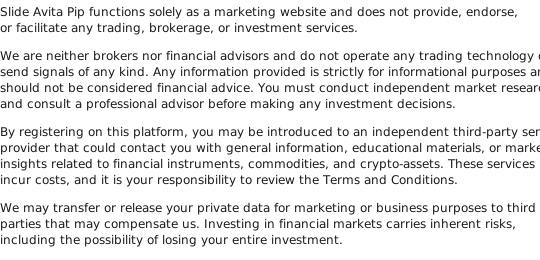
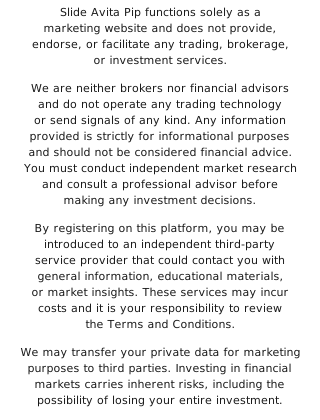
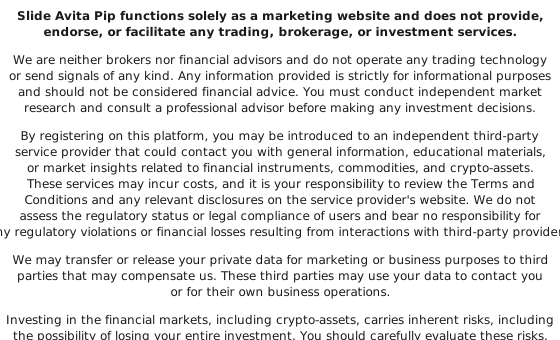
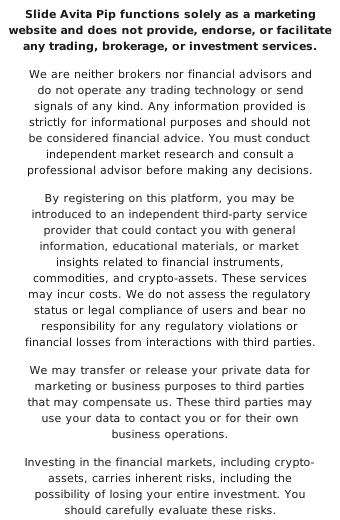
This website functions solely as a marketing platform and does not provide, endorse, or facilitate any trading, brokerage, or investment services.
Read More